

- New


Publication date: January, 2027
Pages: 441
DOI 10.22618/TP.SWMMB.2027.441
ISBN 978-615-7058-47-7 Paperback, €69
ISBN 978-615-7058-46-0 Hardcover, €84
eISBN 978-615-7058-48-4 eBook, OPEN ACCESS
Printed copies will be available starting the end of January 2027. For pre-orders, please email us at publishing@trivent-publishing.eu.
For any unavailable copies on our website, please refer to our distributors: ISD LLC for North and South America and Mare Nostrum for Europe and the rest of the world.
 This book is fully available in open access.
 Download full eBook here

Sanctity and War in the Middle Ages: An Introduction Download PDF
Javier Albarrán
Ecclesiastical Attitudes Towards War in the Visigothic Kingdom Download PDF
Jesús Huertas-Gómez
War and Religion: Narratives of Conquest of Southern Portuguese Towns Download PDF
Luís Filipe Oliveira
Holy Warriors in Medieval Arab Folk Narratives: Martyrdom and Ethnicity Download PDF
Oleg A. Sokolov
Relics and Holy War in the Kingdoms of León and Castile (11th-12th C.) Download PDF
Carlos De Ayala
Furta Sacra and the Military Use of Relics by Italian Maritime Cities (11th-14th Century) Download PDF
Simone Lombardo
“With Honour and Victory”: The War Activity of the Archbishop of Tarragona Pero De Urrea and the Sacred Protection Download PDF
Eduard Juncosa Bonet
Claims of Chinese Ancestry and Accounts of the First Christian Martyrdom in Battle Download PDF
Kevin Vogelaar
Jihād and the Sanctification of the Almohad Caliph Ya‘qūb Al-Manṣūr Download PDF
Javier Albarrán
Jihād as a Tool for Sanctifying and Constructing the Image of Quṭuz as a Mujāhid Sultan Download PDF
Mehdi Berriah
“Signiferi et duces esse dicuntur Georgius, Mauricius, Mercurius and Demetrius”: Apparitions of Warrior Saints on the Battlefields (11th-13th Centuries) Download PDF
Esther Dehoux
“Cepit crux adversus albigenses in Francia Predicari”: Domingo De Caleruega, the Early Preachers Movement, and Early Thirteenth Century Crusading Download PDF
Kyle C. Lincoln
Conscripting the Virgin: Holy Mary’s Mediterranean Crusade in Alfonso X’s Cantigas De Santa María (ca. 1275) Download PDF
Alexander J. Korte
Notes on Contributors Download PDF
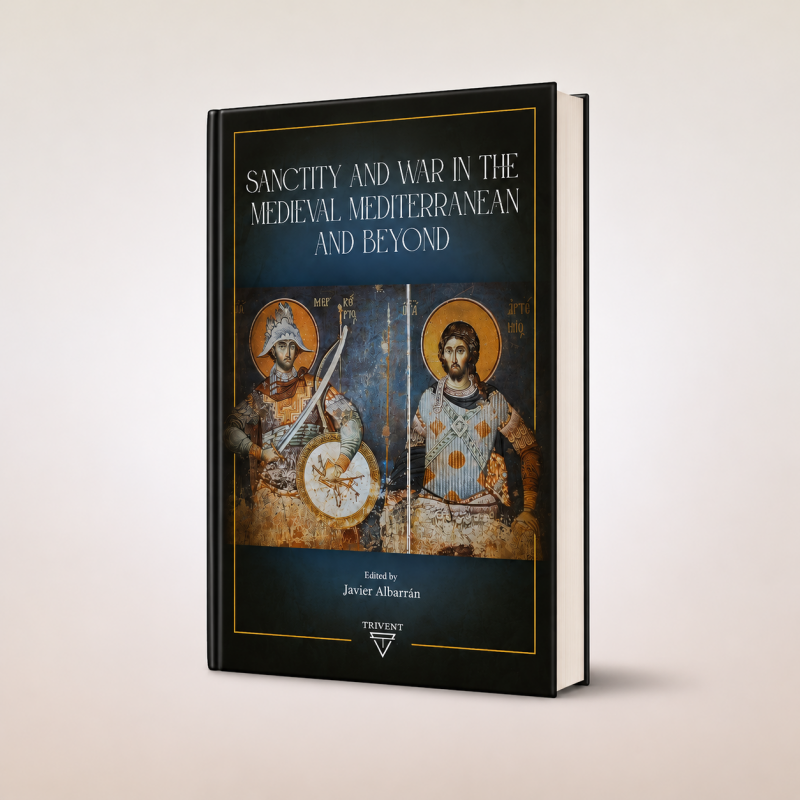
The relationship between sanctity and warfare constitutes a significant aspect of the religious, political, and cultural history of the medieval Mediterranean and beyond. This volume examines the mechanisms through which warfare acquired a sacred dimension, military activity contributed to the construction of sanctity, and holy figures became associated with the conduct and representation of war in Christian and Islamic societies.
The contributions are organised around three thematic axes: the sanctification of warfare through rituals, relics, and symbols; the construction of sanctity through military activity; and the representation of saints and holy figures in narratives of war. Particular attention is devoted to ecclesiastical attitudes towards warfare, the military use of relics, martyrdom, the role of jihād in the construction of sacral rulership, the intervention of warrior saints on battlefields, and the significance of preaching and religious narratives in the context of crusading.
The comparative study of Christian and Islamic traditions provides a framework for examining the interplay between religious authority, military activity, and political legitimacy. The volume thus contributes to a broader understanding of the reciprocal relationship between warfare and sanctity, as well as of the religious practices and discursive strategies through which this relationship was articulated in medieval societies.
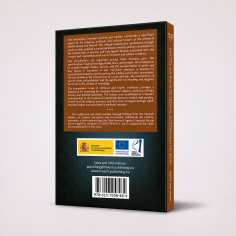
This publication was made possible through funding from the Spanish Ministry of Science, Innovation and Universities (Ministerio de Ciencia, Innovación y Universidades) and the State Research Agency (Agencia Estatal de Investigación) via grant RYC2023-044101-I, which supported the Open Access publication of this work.
Dr. Javier Albarrán is a Ramón y Cajal tenure-track researcher in the Department of Medieval History at the University of Granada and Principal Investigator of the Research Group “Production, Exchanges, Narratives and Materiality”. He specializes in medieval Islamic history, particularly of al-Andalus and the Maghreb, and his research focuses on areas such as the history of jihad, minorities in al-Andalus, the Islamic response to the Crusades, memory in the Islamic West, and al-Andalus in contemporary thought. One of his most recent research lines concerns environmental narratives in the medieval Islamic West. He has undertaken study and research stays at various international institutions, including the University of Jordan, the University of Religions and Denominations in Qom (Iran), Sidi Mohamed Ben Abdellah University in Fez, and the University of Göttingen. In 2020–2021, he was a Junior Fellow at the RomanIslam Center for Advanced Studies at the University of Hamburg, and until 2024, he served as Assistant Professor of Medieval History at the Universidad Autónoma de Madrid. He is the author of numerous articles, chapters and books, including Ejércitos benditos. Yihad y memoria en al-Andalus (10th–13th centuries) (Granada, 2020). More recently, he has coordinated the collective volumes Al-Andalus y la guerra (Madrid, 2024) and Violencia interconfesional: realidades y percepciones en la península ibérica (Granada, 2024).


Publication date: January, 2027
Pages: 441
DOI 10.22618/TP.SWMMB.2027.441
ISBN 978-615-7058-47-7 Paperback, €69
ISBN 978-615-7058-46-0 Hardcover, €84
eISBN 978-615-7058-48-4 eBook, OPEN ACCESS
Printed copies will be available starting the end of January 2027. For pre-orders, please email us at publishing@trivent-publishing.eu.
For any unavailable copies on our website, please refer to our distributors: ISD LLC for North and South America and Mare Nostrum for Europe and the rest of the world.
This book is fully available in open access.
Download full eBook here


I am most pleased to recommend Trivent publishing to anyone who is at the “publish a book” stage of life. The team is professional, outstanding, supportive, they are intelligent editors who will direct, not coddle, an author on his/her journey to publication.

I have been working with the Philosophical Journal of Conflict and Violence since its debut in 2017. It has been a pleasant experience to see how the papers take shape in the process from submission to peer review to publication. The editor-in-chief together with the Trivent team do a tremendous job and are always seeking quality above all!

I’ve participated in two conferences organized by Trivent in the last few years and both were a nice experience – went smoothly and had decent talks in good spirit. When it came to managing manuscripts, I was surprised by the professionalism by which they helped my text get published. I definitely enjoyed working with them!