



Publication date: June, 2024
Pages: 364, colour
ISBN 978-615-6696-32-8 Paperback, €46.00
ISBN 978-615-6696-31-1 Hardcover, €73.00
eISBN 978-615-6696-33-5 eBook, open access
DOI 10.22618/TP.RCTSP.2024.364
For any unavailable copies on our website, please refer to our distributors: ISD LLC for North and South America and Mare Nostrum for Europe and the rest of the world.
 This book is fully available in open access.


The open access publication of this book was supported by La Fundación Juanelo Turriano.
Sociedad y medida del tiempo en la Castilla bajomedieval. Prólogo (Isabel del Val Valdivieso)
Prólogo del autor
Introducción
Definición del tema
Cuestiones metodológicas
Estado de la cuestión
Contenidos
Relojes públicos
León
Santa Marina del Rey
Salamanca
Medina del Campo
Palencia
Burgos
Valladolid
Sevilla
Relojes privados
Primeras noticias
Los relojes de Isabel I
Después de Isabel I
Relojeros
Precisiones sobre el oficio de relojero
Algunos relojeros
Un colectivo profesional con gran movilidad
Lo material
Construcción
Mantenimiento
El taller del relojero
Anexo: Talleres y herramientas de relojería
Lo inmaterial
El tiempo
Lo simbólico
Conclusiones
Introducción y difusión del reloj mecánico en Castilla
Implantación de la indicación horaria moderna e impacto social
Apéndice documental
Bibliografía
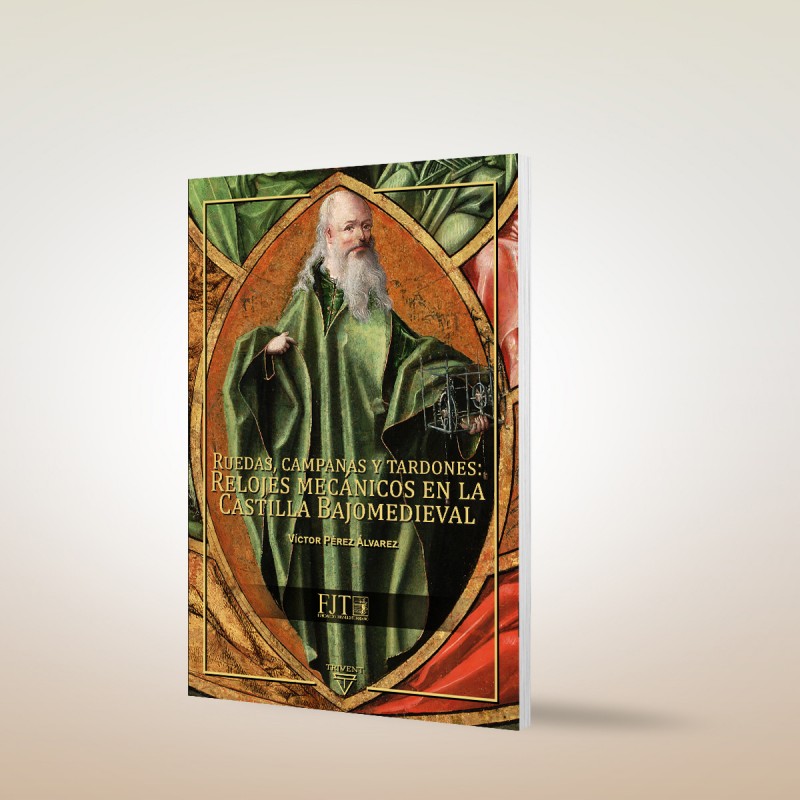
Conocer el tiempo es esencial para la coordinación de los diferentes actores de la sociedad del siglo XXI. Cada uno de nosotros va literalmente atado a un reloj por la muñeca y mirar la hora es un gesto interiorizado e inconsciente. El origen de esta necesidad se remonta a la aparición de los primeros relojes públicos en el siglo XIV, que eran objetos de prestigio y las ciudades competían entre sí por tener el más grande y vistoso. Como accesorio urbano, quedó ligado a la imagen de ciudad y del buen gobierno. Cargado de un complejo valor simbólico, el reloj se utilizo en metáforas de conceptos tan dispares como la ‘vanitas’, la mecánica del universo o la creación divina. En esta obra se desgrana la historia de los relojes castellanos más destacados desde la segunda mitad del siglo XIV en adelante, estudiando su construcción y los retos técnicos a los que se enfrentaban los relojeros. También se explica cómo cambió la forma de medir el tiempo a raíz de su la introducción así como su impacto cultural en la sociedad castellana.
Knowing the time is essential for the coordination of the different actors in twenty-first-century society. Each of us is literally tied to a clock by the wrist, and checking the time is an internalized, unconscious gesture. The origin of this need goes back to the appearance of the first public clocks in the fourteenth century, which were prestige objects, and cities competed with one another to have the largest and most eye-catching one. As an urban accessory, the clock became linked to the image of the city and of good government. Charged with a complex symbolic value, the clock was used in metaphors for concepts as disparate as vanitas, the mechanics of the universe, or divine creation. This book traces the history of the most notable Castilian clocks from the second half of the fourteenth century onward, studying their construction and the technical challenges faced by clockmakers. It also explains how the way of measuring time changed as a result of their introduction, as well as their cultural impact on Castilian society.




Publication date: June, 2024
Pages: 364, colour
ISBN 978-615-6696-32-8 Paperback, €46.00
ISBN 978-615-6696-31-1 Hardcover, €73.00
eISBN 978-615-6696-33-5 eBook, open access
DOI 10.22618/TP.RCTSP.2024.364
For any unavailable copies on our website, please refer to our distributors: ISD LLC for North and South America and Mare Nostrum for Europe and the rest of the world.
This book is fully available in open access.
The open access publication of this book was supported by La Fundación Juanelo Turriano.


I am most pleased to recommend Trivent publishing to anyone who is at the “publish a book” stage of life. The team is professional, outstanding, supportive, they are intelligent editors who will direct, not coddle, an author on his/her journey to publication.

I have been working with the Philosophical Journal of Conflict and Violence since its debut in 2017. It has been a pleasant experience to see how the papers take shape in the process from submission to peer review to publication. The editor-in-chief together with the Trivent team do a tremendous job and are always seeking quality above all!

I’ve participated in two conferences organized by Trivent in the last few years and both were a nice experience – went smoothly and had decent talks in good spirit. When it came to managing manuscripts, I was surprised by the professionalism by which they helped my text get published. I definitely enjoyed working with them!