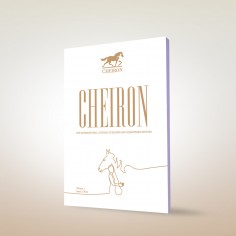
This issue offers an interdisciplinary examination of the cultural, literary, historical, and visual significance of horses and human–animal relations across Byzantine, medieval European, Persian, and nineteenth-century transregional contexts. The contributions explore animal agency in Byzantine literature, equine representation in medieval vernacular texts, the artistic and travel experience of Edward Troye in the Holy Land, and European perceptions of Persian horses across time. Together, the articles demonstrate how equine studies can deepen understanding of authorship, mobility, cross-cultural exchange, artistic production, and the historical meanings attached to animals.
Vol. 5 (Issue 1/2025)
Pages 1-161
DOI: 10.22618/TP.Cheiron.20255.1
 You can read this issue in open access
Sophia Xenophontos
Abstract
Modern scholars have recognised the role of material and symbolic animals for the Byzantines. Nonetheless, we still lack zoocentric investigations concentrating on animals as embodied subjects with their own needs and intents. This article decentres Theodore Hyrtakenos’s Letters (fourteenth century) from the human narrator, makes his horse the focus of attention, and, using insights from posthumanism, modern equine ethology, veterinary science, horse nutrition, and historical praxeology, shows that this animal is not a narrative prop but a social actor and agent. It thus highlights the dynamics of the animal lens as a source for interdisciplinary methodologies that supplement and refine our interpretation of Byzantine sources.
Conny Burian
Abstract
The Nibelungenlied and Wolfram’s Parzival differ in their depiction of horses. In the Nibelungenlied, horses play a marginal role, but their richly adorned tack is described in detail. The focus on women’s equestrian pursuits, moreover, suggests a female perspective. Wolfram’s Parzival, by contrast, presents horses from a male perspective that foregrounds practical aspects of knightly horsemanship, such as riding in battle and tournaments, conformation, soundness, and care. The contrasting depiction of horses in these works may shed light on the enigmatic authors of these high medieval texts.
Gary A. O’Dell
Abstract
Edward Troye was America’s most celebrated painter of animal portraits during the nineteenth century, primarily of Thoroughbred horses. During 1855-56, he accompanied wealthy Kentucky turfman Keene Richards to the Near East on an expedition to purchase horses from among the Bedouins. This paper focuses primarily upon his travel through Palestine and the circumstances in which his Oriental paintings were created, an aspect of his life which has often been overlooked in favor of his better-known work concerning animal paintings. I have made extensive use of Troye’s personal journal, which provides a day-by-day accounting of this trip. Few other writers have tapped this important resource, and even then only sparingly. Finally, a number of significant errors made by previous researchers are corrected.
D.T. Potts
Abstract
The horses of Iran have attracted discussion since antiquity. Beginning in the mediaeval era they were exported en masse to India and used as diplomatic gifts for rulers from Britain to Japan. As increasing numbers of Europeans went to Iran in the eighteenth and nineteenth centuries, interest grew in the specific breeds raised there, the most promising crosses and the potential for enriching the stud farms of Europe and Russia. Concerted efforts were made by the Russian and Austrian governments to acquire mares and stallions for breeding purposes.
Reviewed by Anastasija Ropa


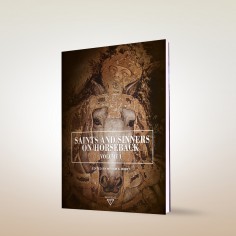
This issue offers an interdisciplinary examination of the cultural, literary, historical, and visual significance of horses and human–animal relations across Byzantine, medieval European, Persian, and nineteenth-century transregional contexts. The contributions explore animal agency in Byzantine literature, equine representation in medieval vernacular texts, the artistic and travel experience of Edward Troye in the Holy Land, and European perceptions of Persian horses across time. Together, the articles demonstrate how equine studies can deepen understanding of authorship, mobility, cross-cultural exchange, artistic production, and the historical meanings attached to animals.
Vol. 5 (Issue 1/2025)
Pages 1-161
DOI: 10.22618/TP.Cheiron.20255.1
You can read this issue in open access


I am most pleased to recommend Trivent publishing to anyone who is at the “publish a book” stage of life. The team is professional, outstanding, supportive, they are intelligent editors who will direct, not coddle, an author on his/her journey to publication.

I have been working with the Philosophical Journal of Conflict and Violence since its debut in 2017. It has been a pleasant experience to see how the papers take shape in the process from submission to peer review to publication. The editor-in-chief together with the Trivent team do a tremendous job and are always seeking quality above all!

I’ve participated in two conferences organized by Trivent in the last few years and both were a nice experience – went smoothly and had decent talks in good spirit. When it came to managing manuscripts, I was surprised by the professionalism by which they helped my text get published. I definitely enjoyed working with them!