


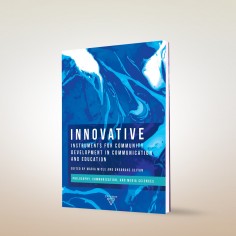
Publication date: February, 2021
Pages: 360, colour
ISBN 978-615-81689-4-6 Paperback, €25.00
ISBN 978-615-6405-10-4 Hardcover, €75.00
eISBN 978-615-81793-6-2 eBook, Open Access
DOI: 10.22618/TP.PCMS.20216
For any unavailable copies on our website, please refer to our distributors: ISD LLC for North and South America and EUROSPAN for Europe and the rest of the world.
 This book is available in open access.
Introduction, Maria Micle & Gheorghe Clitan  Download PDF
CHAPTER 1
Gheorghe Clitan, Oana-Adela Barbu-Banes Kleitsch, Mental Filters Used in Manipulating the Vote through Electoral Posters Containing Religious Symbols Download PDF
CHAPTER 2
Alina Romașcu, Maria Micle, The Mobilization of the Romanian Diaspora: An Overview of a Transnational Community Connected during the 2014 Presidential Elections in Romania Download PDF
CHAPTER 3
Tomi Paula Pompilia, The Logical Structure of Manipulation Download PDF
CHAPTER 4
Ștefania Bejan, The Persuasive Potential of Storytelling in Professions of Contemporary Communication Download PDF
CHAPTER 5
Simona Sava, Laura Malița, Simona Negomireanu, Contributions of Universities to Community Learning and Development Download PDF
CHAPTER 6
Aleksandra Pejatović, Miomir Despotović, Education Response to the World of Work in the Knowledge Society Download PDF
CHAPTER 7
Otilia Bersan, The Kindergarten-Family Partnership, a Basis for Early Childhood Education Download PDF
CHAPTER 8
Remus Runcan, Anxiety in Adolescence: A Literature Review Download PDF
CHAPTER 9
Ileana Rotaru, Training and Assessing Media Education Competence in Professional Training Programs for Teachers. The Case Study of Romania Download PDF
CHAPTER 10
Ileana Dascălu, Education in Cultural Heritage as a Duty of Intergenerational Justice Download PDF
CHAPTER 11
Regula Feitknecht, Jasmine Lovey, Vocational Training and Education in the Library and Information Professions in Switzerland: An Overview and Some Reflections Download PDF
CHAPTER 12
Victoria Frâncu, Digital Libraries: Their Role in Building Communities Download PDF
CHAPTER 13
Elena Tîrziman, Maria Micle, The Pubic Library: A Factor of Social Inclusion in the Local Community Download PDF
CHAPTER 14
Corina Turșie, Participatory Practices in European Capitals of Culture: The Case of Timisoara 2021 Download PDF
CHAPTER 15
Ilie Rădoi, The European Capital of Culture Programme and Sustainable Development in a Cross-border Region Case Study: Timișoara 2021, Novi Sad 2021 Download PDF
CHAPTER 16
Oana Șerban, Normative Gaps between Communities and Collective Identities in Governing Cultural Heritage: An Argument on How to Apply Hobbesian and Lockean Theories to Restore the Political Dignity of Communities in Their Role to Safeguard Cultural Heritage Download PDF
CHAPTER 17
Codruța Simionescu, Participating in the Co-creation of New Narrative regarding European Identity through European Capitals of Culture Download PDF
CHAPTER 18
Ferenc András, The Point of a Needle: Communication Space as a Space of Community Download PDF
CHAPTER 19
Aurel Codoban, The Communication Background of Philosophical Counseling Download PDF
CHAPTER 20
Florina Haret, Philosophical Counselling as a Secular Approach to the Problem of Evil Download PDF
CHAPTER 21
Armand A. Voinov, Plato’s Attitude Towards Suicide In The Dialogue Crito Download PDF
CHAPTER 22
Delia Nadolu, Bogdan Nadolu, About Immortality: a Socio-Anthropological Approach Download PDF
CHAPTER 23
Hîrjoi Cristian, Frank Speech in the Epicurean Philosophical School Download PDF
CHAPTER 24
Ionel Nariţa, Real and Imaginary Download PDF
CHAPTER 25
Tea Radović, The Allegory of Quantum Persona. The Absurdity of Diagnostics Download PDF
The multiple facets of this volume belong to five large themes. The first theme, that of persuasion and manipulation, is studied here through electoral campaigns (i.e., mental filters used in voting manipulation, the mechanisms of vote mobilisation, manipulation and storytelling models). The institutionalization of education represents the second theme, approached here through specific interdisciplinary instruments: the intersection of higher education with public learning, the answers of the knowledge society to the issues of contemporary work problems, the institutional relationships used to solve educational problems specific to childhood and adolescence, as well as the role of media competencies in professional development. The third theme is related to the inheritance and transmission of cultural identity, instrumentalized through issues such as: the duty of intergenerational justice with regard to cultural heritage, education and vocational training in library science, the social inclusion role of public and digital libraries. The collective and cultural identity of communities represents the fourth large theme, being approached through a triple perspective: the philosophical background of restoring the political dignity of communities, the communication space as a point of a needle towards the community space, and the communicational issue of the European capital of culture programmes. Lastly, the fifth theme belongs to practical and applied philosophy, specifically philosophical counselling, debating issues such as: the identification of the communicational background for this type of counselling, the secular approach to the problem of evil from a philosophical counselling perspective, the discussion of Platon’s attitude towards suicide and of frank speech in the Epicurean school, the socio-anthropological perspective of immortality, as well as the formal approach of the relationship between real and imaginary.
GHEORGHE CLITAN is Prof PhD Habil and the Head of the Philosophy and Communication Studies Department, Faculty of Political Sciences, Philosophy and Communication Studies at the West University of Timisoara. His main research interests include critical thinking, informal logic, rhetoric, pragmatics, advertising analysis and information theory. He has published articles in Romanian and international journals, studies in volumes published at international and Romanian publishing houses. He published several books and is the co-author of a Romanian guideline to help students solve the Law School Admission Tests (LSAT). He is one of nine Romanian experts in LSAT for The National Institute of Magistracy (NIM).

Publication date: February, 2021
Pages: 360, colour
ISBN 978-615-81689-4-6 Paperback, €25.00
ISBN 978-615-6405-10-4 Hardcover, €75.00
eISBN 978-615-81793-6-2 eBook, Open Access
DOI: 10.22618/TP.PCMS.20216
For any unavailable copies on our website, please refer to our distributors: ISD LLC for North and South America and EUROSPAN for Europe and the rest of the world.
This book is available in open access.


I am most pleased to recommend Trivent publishing to anyone who is at the “publish a book” stage of life. The team is professional, outstanding, supportive, they are intelligent editors who will direct, not coddle, an author on his/her journey to publication.

I have been working with the Philosophical Journal of Conflict and Violence since its debut in 2017. It has been a pleasant experience to see how the papers take shape in the process from submission to peer review to publication. The editor-in-chief together with the Trivent team do a tremendous job and are always seeking quality above all!

I’ve participated in two conferences organized by Trivent in the last few years and both were a nice experience – went smoothly and had decent talks in good spirit. When it came to managing manuscripts, I was surprised by the professionalism by which they helped my text get published. I definitely enjoyed working with them!

