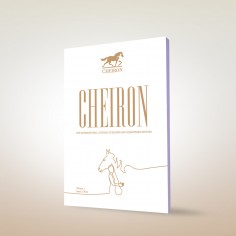
This issue offers an interdisciplinary exploration of human–equine relations across literary, historical, cultural, and heritage contexts. Spanning early Japan, imperial China, early modern England and Castile, nineteenth-century military memoir and correspondence, industrial coalmining communities, and contemporary wild horse adoption practices, the contributions examine horses and other equids as agents of transport, symbolism, labor, identity, memory, and interspecies encounter. Collectively, the issue highlights the centrality of equine studies to understanding social life, cultural representation, ritual practice, and historical experience across diverse times and places.
Vol. 4 (Issue 2/2024)
Pages 1-140
DOI: 10.22618/TP.Cheiron.20244.2
 You can read this issue in open access
Anna Nielsen
Abstract
The Man’yōshū is Japan’s earliest extant waka poetry anthology, compiled sometime after 759 CE. Mentions of horseback riding appear frequently, but there has been little examination of the roles that equines played in ancient Japanese society. Three questions relating to Japanese equine use will be considered: how did horseback travel alter ancient Japanese conceptions of distance and time? How was equestrianism adapted to the landscapes and of Japan and used to fulfill transportation needs of elites? And finally, how did horses become integrated within early Japanese society as a commonplace concept, if not a truly commonplace animal?
Sheng-mei Ma
Abstract
Viewed as a vehicle for transportation and for glory, the horse carries the human story on its back, designed to be ridden, stalled (stored?), and forgotten, until the next ride or flight of fancy. The horse is taken as a symbol rather than as is—a corporeal, sentient being. In Wu Cheng’en’s sixteenth-century Chinese classic Journey to the West, three half-divine, half-beast disciples named Monkey, Pigsy, and Sandy escort their master Tripitaka in the quest westward with the goal of acquiring India’s Buddhist sutras for the Tang dynasty. The company of four would not have made it without the fifth and largely ignored member, the white Dragon Horse which carries the mortal monk on this long journey and back through eighty-one preordained calamities. Although deemed a beast of burden and an extra, the Dragon Horse plays an essential role in the pilgrimage not only in ferrying the physically and temperamentally frail monk but also in his affinity to the protagonist, the powerful Monkey King. The Dragon Horse is closely tied to both the master and Monkey, the reason and the means of the pilgrimage.
Keri Blair
Abstract
Using horses as a historical lens, this paper seeks to draw attention to an instance where emblematic equestrianism was embedded within a deeply religious and ceremonial setting, while also providing insight into the symbolic nature of horse culture in early modern England. In restoring continuity and tradition in England after the Interregnum, coronation officials used ritualistic equestrianism as symbols of power and authority, knighthood, and monarchism in what diarist Samuel Pepys referred to as “the great show” – otherwise known as the 1661 coronation of King Charles II.
Janice Gunther Martin
Abstract
In September 1552, the shoemaker Martín de Narvajas of Logroño bought a grey mule. A blemish on its leg bothered him, however, and he asked the equine doctor Juan de Villareal to remove it. All did not end well for the mule, as Narvajas’s subsequent lawsuit against Villareal attests. Case studies like this illustrate the significance of equids in early modern Castile, enmeshed in daily life and the social world of those around them. I argue that to understand the life of the mule and other historical animals, we should consider them as individualized creatures belonging to a broader community.
Anastasija Ropa
Abstract
Nadezhda Durova is one the best-known females in the cavalry, who, moreover, published memoirs of her military career. In this memoir, the “cavalry maiden” describes her early bonding with her father’s stallion, Alcides, whom she tamed, as well as her experiences of other horses in the military context. This study discusses a selection of episodes presenting a nuanced picture of Durova’s relations with various equines, to argue that, while her love of horses, and Alcides particularly, was characterized by strong emotions, it was anything but sentimental. It is concluded that, in her dealings with horses, Durova showed both affection for them and pragmatism.
Allen F. Horn IV
Abstract
Charles Francis Adams Jr., grandson of President John Quincy Adams, left a large written record from his time as a cavalry officer in the U.S. Civil War. Adams's letters frequently mention his horses and provide key insights into the human-equine relationship in wartime. Adams, like many soldiers in his time and place, believed in showing kindness towards animals, but the demands of the war forced him to put aside these values. His cruelty was not confined to horses either. When Adams took command of a Black regiment in 1864, he frequently denigrated his Black soldiers and compared them with horses.
David Amos
Abstract
Pit ponies have featured in several local heritage initiatives over the last decade. Despite the fact that the last ones worked underground at East Midlands collieries in the early 1970’s, they are fondly remembered in coalmining communities and have become an integral part of coalmining folklore. As the last generation of coalminers who worked with them approach the twilight of their lives, this short essay takes a brief look at the role they played in coalmining and how this is reflected locally in heritage and the arts in the post coal era.
Nancy Cerroni, Christine Reed
Abstract
The design of adoption and training of free-roaming horses removed from their natural homes should follow the flexibility and continuous interactions that characterize their social lives, rather than “natural training” techniques based on assumptions about dominance hierarchies. This study includes excerpts from a detailed journal based on the author’s years of observing free-roaming horses on the Pryor Mountain Wild Horse Range and how those observations have shaped her approach to the adoption and training of an orphaned foal.
Rena Maguire, Irish Late Iron Age Equestrian Equipment in its Insular and Continental Context
Reviewed by Miriam A. Bibby


This issue offers an interdisciplinary exploration of human–equine relations across literary, historical, cultural, and heritage contexts. Spanning early Japan, imperial China, early modern England and Castile, nineteenth-century military memoir and correspondence, industrial coalmining communities, and contemporary wild horse adoption practices, the contributions examine horses and other equids as agents of transport, symbolism, labor, identity, memory, and interspecies encounter. Collectively, the issue highlights the centrality of equine studies to understanding social life, cultural representation, ritual practice, and historical experience across diverse times and places.
Vol. 4 (Issue 2/2024)
Pages 1-140
DOI: 10.22618/TP.Cheiron.20244.2
You can read this issue in open access


I am most pleased to recommend Trivent publishing to anyone who is at the “publish a book” stage of life. The team is professional, outstanding, supportive, they are intelligent editors who will direct, not coddle, an author on his/her journey to publication.

I have been working with the Philosophical Journal of Conflict and Violence since its debut in 2017. It has been a pleasant experience to see how the papers take shape in the process from submission to peer review to publication. The editor-in-chief together with the Trivent team do a tremendous job and are always seeking quality above all!

I’ve participated in two conferences organized by Trivent in the last few years and both were a nice experience – went smoothly and had decent talks in good spirit. When it came to managing manuscripts, I was surprised by the professionalism by which they helped my text get published. I definitely enjoyed working with them!