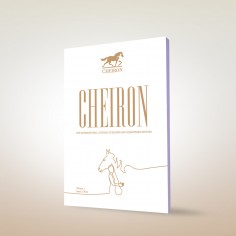
This special issue brings together interdisciplinary studies on the transmission of equine medical, veterinary, and related scholarly knowledge across the medieval and early modern Middle East and Caucasus. Through philological, historical, linguistic, and manuscript-based approaches, the contributions examine Arabic, Armenian, and Georgian sources, highlighting the movement of texts, terminology, and practical expertise across geographic, linguistic, and cultural boundaries. Collectively, the issue advances understanding of hippiatry, manuscript traditions, translation practices, and the broader dynamics of knowledge transfer in premodern Eurasia.
Vol. 5 (Special Issue/2025)
Pages 1-196
DOI: 10.22618/TP.Cheiron.20255.SI
 You can read this issue in open access
Jasmine Dum-Tragut
Jasmine Dum-Tragut
Abstract
The project “Meeting in the Body of the horse” offers the rare opportunity to trace the history of what is presumably one underlying text from the thirteenth to the twentieth centuries, its journey from the Muslim Middle East to the Christian East Mediterranean and back, and thus also the ways and means of transmitting knowledge in equine medicine and hippology across geographic, ethnic, linguistic and religious boundaries – and through various historical periods.
Hasmik Paremuzyan
Abstract
This paper explores the Armenian agricultural text Girkʿ Vastakocʿ, focusing on its manuscript tradition, distinctive linguistic features, and complex transmission history. By tracing its connections to the Arabic Anatolius tradition and critically reviewing the main scholarly debates concerning authorship, place, and time of translation, the study reconsiders long-standing assumptions about the origins and development of the work. The analysis highlights the layered and multilingual nature of its transmission and situates the text within broader patterns of cultural exchange, adaptation, and intellectual activity in medieval Armenian scholarly life.
Susanne Saker
Abstract
Two illuminated manuscripts of the Kitāb al-Bayṭara [Book on Equine Medicine] by Ibn al-Aḥnaf, namely Ṭibb Khalīl Āghā 8 (Cairo, Dār al-Kutub al-Miṣriyya) and Ahmet 2115 (Istanbul, Topkapı Museum), are among the most famous veterinary manuscripts in Arabic. But the text itself has neither been edited nor translated by now. It has recently turned out that Ms 6126, held by the Bibliothèque royale Rabat and in 2017 still considered anonymous, is another copy of this hippiatric treatise. This paper is intended to provide a first insight into the manuscript and give an idea of its content.
Martin Heide
Abstract
The “Book of Hippiatry” (Kitāb al-Bayṭara) belongs to the Byzantine veterinary tradition, which became dominant in the Arabic language after the ninth century CE. This article dwells on some of the most important publications on Arabic veterinary science that appeared in the last two decades and emphasizes the importance of careful philological and interdisciplinary work for the edition and translation of medieval books on hippiatry.
Marat M. Yavrumyan
Abstract
The paper focuses on the Kitāb al-bayṭara, an early Mamluk compilation of equine care texts “ever written down” in Arabic (or in Arabic translation) and circulated in Cairo in the late 1280s. It will show that this work, as a kind of corpus hippiatricorum arabicorum, was not only a response to the new cultural needs that reflected a renewed interest in the traditional al-furusīya wa-l-bayṭara (horsemanship and hippiatry), but also an ambitious and outstanding undertaking of Mamluk book culture in the well-known technique of muṣannaf-type collections of hadith literature.
Nino Sakvarelidze
Abstract
This paper offers an examination of the Georgian veterinary medical tradition through a close study of Ioane Ossesdze’s late eighteenth-century compilation. Drawing on the principal extant manuscript witnesses, the paper undertakes an analysis of textual and structural adaptations, terminological strategies, and the dynamics of knowledge transfer within a multilingual and multicultural context involving Georgian, Armenian, Persian, and Arabic sources, as well as the collaborative efforts of Georgian and Armenian translators. Special emphasis is placed on the colophon, which serves both as a crucial source of information on authorship, commissioners, contents, and date, and as a meta-textual reflection on the translation methods employed.
Heinrich Justin Evanzin, Jasmine Dum-Tragut
Abstract
This research introduces a novel interdisciplinary method for the botanical identification of medicinal plants in Amirdovlat’ Amasiac'i's fifteenth-century Armenian medical text, Angitac' Anpēt, offering insights into historical pharmaceutical and potentially veterinary practices. By combining linguistic, philological, ethnobotanical, and pharmacognostic analyses, the study develops a 20-point scoring system to assess the identifiability of historical materia medica. Applying this framework to metaphorical plant names like “bull’s tongue,” the research demonstrates its value in clarifying historical drug origins. For example, names such as the Armenian gaṛnalezu ("lamb's tongue") or Gaṛnadmakik ("little lamb-tail") can denote a plant drug (e.g., Plantago spp.) or, significantly for veterinary history, an animal product like the fat from a fat-tailed sheep (a common pharmaceutical excipient in hippiatric texts). This inherent ambiguity underscores the necessity of interdisciplinary engagement across philological and natural sciences, significantly benefiting medical and veterinary history, alongside Armenology and lexicography.
Jasmine Dum-Tragut
Abstract
The oldest surviving complete Armenian horse book from Armenian Cilicia in the late thirteenth century, the Codex M 10975, not only contains significant knowledge about equine medicine, breeding, appearance, and training, but also likely provides an overview of the most prevalent brands and their designations used in the medieval orient. This offers deeper insights into the sources of this manuscript, as well as its reproductions and translations, and also allows for conclusions about the transfer of knowledge. The general significance of these brands, whether as ownership marks, quality marks, or potentially breeding area marks, is also explored.
Hylke Hettema
Jasmine Dum-Tragut


This special issue brings together interdisciplinary studies on the transmission of equine medical, veterinary, and related scholarly knowledge across the medieval and early modern Middle East and Caucasus. Through philological, historical, linguistic, and manuscript-based approaches, the contributions examine Arabic, Armenian, and Georgian sources, highlighting the movement of texts, terminology, and practical expertise across geographic, linguistic, and cultural boundaries. Collectively, the issue advances understanding of hippiatry, manuscript traditions, translation practices, and the broader dynamics of knowledge transfer in premodern Eurasia.
Vol. 5 (Special Issue/2025)
Pages 1-196
DOI: 10.22618/TP.Cheiron.20255.SI
You can read this issue in open access


I am most pleased to recommend Trivent publishing to anyone who is at the “publish a book” stage of life. The team is professional, outstanding, supportive, they are intelligent editors who will direct, not coddle, an author on his/her journey to publication.

I have been working with the Philosophical Journal of Conflict and Violence since its debut in 2017. It has been a pleasant experience to see how the papers take shape in the process from submission to peer review to publication. The editor-in-chief together with the Trivent team do a tremendous job and are always seeking quality above all!

I’ve participated in two conferences organized by Trivent in the last few years and both were a nice experience – went smoothly and had decent talks in good spirit. When it came to managing manuscripts, I was surprised by the professionalism by which they helped my text get published. I definitely enjoyed working with them!